Wednesday, April 28, 2010
Monday, April 26, 2010
It was a dark and stormy night...
Saturday, April 24, 2010
The Rechristened Rollkur
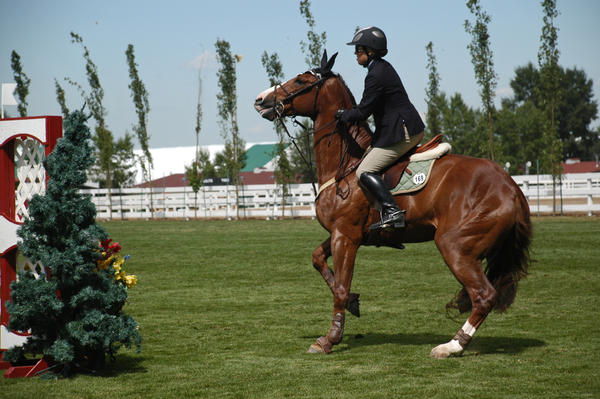
Apparently, however, the FEI has decided to give abusive riders an out. Rollkur, they agree, must be stopped. But LDR? Despite LDR (Low, Deep and Round) distinctly being a extreme and unnatural flexion of the
So what does LDR really stand for? Lazy, Dangerous, and Rewarding? Rollkur and LDR are, in my opinion, slightly different things, but both are indeed unnatural contortions of the horse. LDR is certainly an unhealthy training technique that is not used for correction so much as for competition. It is lazy on part of dressage judges, trainers, and riders; it is dangerous for the horse; but it is also rewarding in competition. This pro-LDR facebook group cites countless successful international dressage riders who train their horses to ride LDR. Anky Van Grunsven, Sjef Janssen, Nicole Werner, Ellen Schulten-Baumer, and Imke Bartels are only a few of the names you might recognize as memb
I can't blame the FEI for being intimidated by the powerful supporters of rollkur--sorry, LDR. Regardless, with such footage out as the infamous "Blue Tongue" video along with the countless other evidence of the horrors of hyperflexion, I think it's high time the FEI took a stand to support the welfare of its horses rather than the success of its influential riders.
______________________
Additional Blog Posts
FHOTD
Sunday, April 18, 2010
West Coast Friendship: Part Seven
Shall I continue on a bit with my story? I know it's been awhile. Part Six is back here, in case you need to refresh your memory...
_______________________
Possibly the most ironic thing that ever happened to me at Magnolia is a little something I like to call "The Great Migration." I had been at Magnolia for several months now, and my days at Carousel Farms seemed a lifetime away. Occasionally, Maura and I would talk about something that had done or seen there, but mostly, I ignored that part of my riding career.
And then, on what seemed to be another ordinary day at the barn, I arrived for my regular lesson and stepped into a nightmare. My first thought as I walked down the aisle of stalls to grab my horse was that I was losing my mind. Familiar faces poked their noses out at me, and I narrowed my eyes, wondering if I was seeing things correctly. Aida, Harlem, City, Seel, Foggy, and Topaz. Six horses new horses at Magnolia, but I knew them all. They had all been at Carousel, their owners loyal boarders who were often Donna's partners in crime. And yet, seemingly overnight, they had crossed some invisible treaty line and made their way to Magnolia.
If I looked just at those first six stalls, I could swear I was back at Carousel Farms. God has a really sick sense of humor.
My little oasis now seemed oddly similar to the place I had fought so hard to escape. As I stood there, staring at the Carousel horses, I battled between curiosity and aversion. I wasn't quite sure how to handle this. And then I heard a voice behind me.
"You used to ride Carousel, right?"
I turned and found myself staring at Foggy's owner. I answered her question with a simple yes, but I was surprised that she recognized me. The boarders at Carousel had formed a sort of clique, bound together by their general distaste of anyone who couldn't afford a horse of her own. She smiled at me then, though, and introduced herself. I answered her politely and made small talk for as long as I could bear before wishing her the best at Magnolia and excusing myself to finish getting ready for my lesson. I ran out of the barn and headed straight for Maura.
"What's going on?" I asked. "Where did all these Carousel people come from?" It's like an infestation in there. I'm not sure I just thought that part, or if I actually said it out loud.
Maura shrugged lightly. "I don't know the whole story. Donna did something to piss them all off, and it was the last straw." She saw the worry in my face and added, "They'll be fine, I promise. You know Tracy won't put up with it if they cause any trouble."
But I was still wary of the Carousel boarders. I was very reserved around them, always polite but always cautious. I still saw them in my heads as Donna and Shannon's comrades in arms, haughty and holier than thou.
It took me months to realize that they weren't those people anymore. Magnolia had the same effect on them as it had had on me. The quiet little barn on the edge of the river brought out the best in people. You couldn't be mean when birds chirped softly in the background, when the smell of cedar chips wafted pleasantly from the stalls, and when everyone else around you was at peace. Away from the pretension of Carousel Farms, their attitudes slipped away.
Or maybe, I began to realize, they had never had an attitude at all.
_______________________
Possibly the most ironic thing that ever happened to me at Magnolia is a little something I like to call "The Great Migration." I had been at Magnolia for several months now, and my days at Carousel Farms seemed a lifetime away. Occasionally, Maura and I would talk about something that had done or seen there, but mostly, I ignored that part of my riding career.
And then, on what seemed to be another ordinary day at the barn, I arrived for my regular lesson and stepped into a nightmare. My first thought as I walked down the aisle of stalls to grab my horse was that I was losing my mind. Familiar faces poked their noses out at me, and I narrowed my eyes, wondering if I was seeing things correctly. Aida, Harlem, City, Seel, Foggy, and Topaz. Six horses new horses at Magnolia, but I knew them all. They had all been at Carousel, their owners loyal boarders who were often Donna's partners in crime. And yet, seemingly overnight, they had crossed some invisible treaty line and made their way to Magnolia.
If I looked just at those first six stalls, I could swear I was back at Carousel Farms. God has a really sick sense of humor.
My little oasis now seemed oddly similar to the place I had fought so hard to escape. As I stood there, staring at the Carousel horses, I battled between curiosity and aversion. I wasn't quite sure how to handle this. And then I heard a voice behind me.
"You used to ride Carousel, right?"
I turned and found myself staring at Foggy's owner. I answered her question with a simple yes, but I was surprised that she recognized me. The boarders at Carousel had formed a sort of clique, bound together by their general distaste of anyone who couldn't afford a horse of her own. She smiled at me then, though, and introduced herself. I answered her politely and made small talk for as long as I could bear before wishing her the best at Magnolia and excusing myself to finish getting ready for my lesson. I ran out of the barn and headed straight for Maura.
"What's going on?" I asked. "Where did all these Carousel people come from?" It's like an infestation in there. I'm not sure I just thought that part, or if I actually said it out loud.
Maura shrugged lightly. "I don't know the whole story. Donna did something to piss them all off, and it was the last straw." She saw the worry in my face and added, "They'll be fine, I promise. You know Tracy won't put up with it if they cause any trouble."
But I was still wary of the Carousel boarders. I was very reserved around them, always polite but always cautious. I still saw them in my heads as Donna and Shannon's comrades in arms, haughty and holier than thou.
It took me months to realize that they weren't those people anymore. Magnolia had the same effect on them as it had had on me. The quiet little barn on the edge of the river brought out the best in people. You couldn't be mean when birds chirped softly in the background, when the smell of cedar chips wafted pleasantly from the stalls, and when everyone else around you was at peace. Away from the pretension of Carousel Farms, their attitudes slipped away.
Or maybe, I began to realize, they had never had an attitude at all.
Friday, April 16, 2010
On The Physiology of Women Riders
I have some hardcore studying to do and a test to take at eight A.M. tomorrow, so I have no time to blog. A big post is coming either tomorrow, or Sunday! Since I feel bad about gypping my readers out of something to read, I dug up this great article from Mary D. Midkiff (Remember her?) that I think every equestrienne can benefit from. Midkiff's book, which I raved about a couple of months ago, might have been emotional, but this article is strictly informational. And there are some enlightening facts about women riders in here. Take from it what you may.
____________________
Women And Horses - What's It All About?
An article by Mary D. Midkiff in the Journal of the AMEA
about Safety in Equestrian Sport
The qualities we see at the top of our riding disciplines have evolved through education, training, hard work, long hours, talent and desire. To be a great rider is a worthy and rewarding goal for male or female. Until recently, the thought processes and approach to teaching and training riders and selecting equipment have been generic and male oriented. But the generic approach is not effective with the majority of riders. The majority are females.
Riding is increasingly being defined by the female element -- she is the predominant participant, dollar spender and decision maker in sporting, showing and recreational activities in the horse industry.
Equestrian Resources (EQR) found over 75% of the members of all equine-related non-racing organizations in the United States are female; over 80% in the American Horse Shows Association (AHSA) alone. This percentage, however, does not indicate the higher number of females involved in pleasure riding. EQH estimates at least 500,000 females in the U.S. are enjoying horses as a sport or leisure activity and many say that number is considerably conservative.
EQR Women & Horses (W&H) Conference and National Tour was created to meet this large and growing population of active equestrian participants and is a program designed to he repeated in locations around the county throughout 1994 and 1995. Each conference presents national personalities and experts in a program of practical discussion, advice and product information devoted to improving the "team" performance of women and their horses.
Through the W&H program and our national experts we are developing techniques that increase awareness of the body and mind of rider and horse as well as provide education in what to look for in equipment that will accommodate the female pelvic and muscular structures efficiently and comfortably-.
In the athletic world at large more females are in competition than ever before and they are gaining performance enhancement by maximizing what is unique in their bodies, minds, and personalities. We are seeing more and more women in the top riding and training ranks of horse sports as leaders of equine-related organizations and as instructors. The education and societal messages they are now receiving indicate it is all right for females to pursue and realize competitive goals.
The basis of and the equipment designed for riding have been established by and for males. Horses throughout time have been used mainly for war, battle, and transportation by males. For example, the Western disciplines descending from the Native American, the working cowboy, and the Pony Express; English riding from the traditions of the hunt field and the military; and the Spanish and Arabic influence with their ancient breeds originating from tribal competitions and ceremonial presentations.
Considering the thousands of years the horse has been used by humans, horses have only been used strictly for pleasure and sport by women for a relative short period. Women have only been riding astride in Europe and the Western hemisphere for approximately 60 years.
Has the female equestrian been provided with every benefit and advantage to allow her to become the best rider she can be? The answer is no. The horse community and ancillary interests need to become more aware of the human element--the female equestrian is structured differently and should be instructed and trained with her health, comfort and safety as a priority.
One aspect of the W&H program addresses the female anatomy and its relationship to the movement of the horse. A national expert and W&H national tour speaker on the subject of the female anatomy and riding is Dr. Deb Bennett of Santa Rosa, California. She has done extensive research on the subject and is a hippologist and a paleontologist by trade.
In an article featured in Equus June 1989 ("Who's Built Best to Ride?"), Dr. Bennett explains, "The technique to which I most strongly object is the instruction given the rider to throw his or her belly or waist forward. In either sex, this motion results in compression of the dorsal aspect of the lumbar vertebral column. Sitting the trot or canter this way, with the crotch dropped downward and the lower back hollowed, will over a period of time shorten and harden the dorsal perivertebral muscles and ligaments, compress the intervertebral disks, and eventually lead to spondylolysthesis and the pinching of nerve roots which emerge dorsolaterally between adjacent vertebrae."
"Thanks to the peculiar bony anatomy which permits them to give birth, women often have difficulty learning to sit the trot or canter without bouncing. Women’s lower backs are typically 'curvier’ (more lordotic) than men's. In women the sacrum articulates with the last lumbar vertebra at a much sharper angle than in men. These differences move the tip of the tailbone dorsally in women, effectively getting it out of the birth canal. However, in the context of riding, this structural arrangement also makes it easy for a women to ride with a hollow back and dropped crotch. Conversely, most men have little difficulty coiling their loins (flexing their lumbar span) which is a pelvic motion essential to following the motion of either the trot or canter.
The W&H Conferences are designed to 1) explore the differences, 2) create awareness about the female body and the origin of pain, 3) develop techniques which allow women to become the most efficient and comfortable riders given their particular anatomical and hormonal variations, and 4) identify equipment that will best accommodate the female body.
We encourage research and recognize the many areas of AMEA members' medical expertise. EQR challenges AMEA members to assist in arriving at meaningful information to help female riders. It is important the sports medicine field be particularly aware of the predominant female population involved with horses. Currently most women are not aware of how their bodies work with the movement of the horse and how they can prevent injuries through better understanding.
We see act abundance of chronic low back pain in female riders. Is it any wonder why? They have been trained to hyperextend their backs and cram their heels down while standing on their toes with an unsupportive saddle since they began to ride as a child. Manufacturers of rib, back supports and knee braces are making a lucrative living off women who ride. W&H chooses the principle of a strong support system within their bodies instead of relying on shortcuts and crutches which in the end will only weaken their muscles.
With the correct information, techniques and equipment, women don't have to hurt to ride.
For example, in the W&H Finesse Versus Strength demonstration sessions, we work with participants on becoming more aware and softening their whole approach to sitting on the horse. We reestablish the seat centered on the ischium and teach the student to concentrate on "filling in" her lower back with strength, which ultimately disallows arching or rounding the shoulders. We loosen the leg and allow it to lie flat in line with the pelvis and ground the foot with the stirrup well behind the ball of the foot with the heel parallel to the ground. The elbows remain soft and bent. This allows for an elastic and moving connection at all times resulting in release and relaxation for both horse and rider.
Physicians and physical therapists need to be aware of the types of unique injuries sustained by female riders as well as understand how they relate to movement while mounted or in other activity surrounding the horse.
Whether it be low back pain, a stressed rotator cuff, a stiff neck, or sore knees, female riders can ride pain-free through awareness, education, the proper saddle, and regular stretching and strengthening exercises.
____________________
Women And Horses - What's It All About?
An article by Mary D. Midkiff in the Journal of the AMEA
about Safety in Equestrian Sport
The qualities we see at the top of our riding disciplines have evolved through education, training, hard work, long hours, talent and desire. To be a great rider is a worthy and rewarding goal for male or female. Until recently, the thought processes and approach to teaching and training riders and selecting equipment have been generic and male oriented. But the generic approach is not effective with the majority of riders. The majority are females.
Riding is increasingly being defined by the female element -- she is the predominant participant, dollar spender and decision maker in sporting, showing and recreational activities in the horse industry.
Equestrian Resources (EQR) found over 75% of the members of all equine-related non-racing organizations in the United States are female; over 80% in the American Horse Shows Association (AHSA) alone. This percentage, however, does not indicate the higher number of females involved in pleasure riding. EQH estimates at least 500,000 females in the U.S. are enjoying horses as a sport or leisure activity and many say that number is considerably conservative.
EQR Women & Horses (W&H) Conference and National Tour was created to meet this large and growing population of active equestrian participants and is a program designed to he repeated in locations around the county throughout 1994 and 1995. Each conference presents national personalities and experts in a program of practical discussion, advice and product information devoted to improving the "team" performance of women and their horses.
Through the W&H program and our national experts we are developing techniques that increase awareness of the body and mind of rider and horse as well as provide education in what to look for in equipment that will accommodate the female pelvic and muscular structures efficiently and comfortably-.
In the athletic world at large more females are in competition than ever before and they are gaining performance enhancement by maximizing what is unique in their bodies, minds, and personalities. We are seeing more and more women in the top riding and training ranks of horse sports as leaders of equine-related organizations and as instructors. The education and societal messages they are now receiving indicate it is all right for females to pursue and realize competitive goals.
The basis of and the equipment designed for riding have been established by and for males. Horses throughout time have been used mainly for war, battle, and transportation by males. For example, the Western disciplines descending from the Native American, the working cowboy, and the Pony Express; English riding from the traditions of the hunt field and the military; and the Spanish and Arabic influence with their ancient breeds originating from tribal competitions and ceremonial presentations.
Considering the thousands of years the horse has been used by humans, horses have only been used strictly for pleasure and sport by women for a relative short period. Women have only been riding astride in Europe and the Western hemisphere for approximately 60 years.
Has the female equestrian been provided with every benefit and advantage to allow her to become the best rider she can be? The answer is no. The horse community and ancillary interests need to become more aware of the human element--the female equestrian is structured differently and should be instructed and trained with her health, comfort and safety as a priority.
One aspect of the W&H program addresses the female anatomy and its relationship to the movement of the horse. A national expert and W&H national tour speaker on the subject of the female anatomy and riding is Dr. Deb Bennett of Santa Rosa, California. She has done extensive research on the subject and is a hippologist and a paleontologist by trade.
In an article featured in Equus June 1989 ("Who's Built Best to Ride?"), Dr. Bennett explains, "The technique to which I most strongly object is the instruction given the rider to throw his or her belly or waist forward. In either sex, this motion results in compression of the dorsal aspect of the lumbar vertebral column. Sitting the trot or canter this way, with the crotch dropped downward and the lower back hollowed, will over a period of time shorten and harden the dorsal perivertebral muscles and ligaments, compress the intervertebral disks, and eventually lead to spondylolysthesis and the pinching of nerve roots which emerge dorsolaterally between adjacent vertebrae."
"Thanks to the peculiar bony anatomy which permits them to give birth, women often have difficulty learning to sit the trot or canter without bouncing. Women’s lower backs are typically 'curvier’ (more lordotic) than men's. In women the sacrum articulates with the last lumbar vertebra at a much sharper angle than in men. These differences move the tip of the tailbone dorsally in women, effectively getting it out of the birth canal. However, in the context of riding, this structural arrangement also makes it easy for a women to ride with a hollow back and dropped crotch. Conversely, most men have little difficulty coiling their loins (flexing their lumbar span) which is a pelvic motion essential to following the motion of either the trot or canter.
The W&H Conferences are designed to 1) explore the differences, 2) create awareness about the female body and the origin of pain, 3) develop techniques which allow women to become the most efficient and comfortable riders given their particular anatomical and hormonal variations, and 4) identify equipment that will best accommodate the female body.
We encourage research and recognize the many areas of AMEA members' medical expertise. EQR challenges AMEA members to assist in arriving at meaningful information to help female riders. It is important the sports medicine field be particularly aware of the predominant female population involved with horses. Currently most women are not aware of how their bodies work with the movement of the horse and how they can prevent injuries through better understanding.
We see act abundance of chronic low back pain in female riders. Is it any wonder why? They have been trained to hyperextend their backs and cram their heels down while standing on their toes with an unsupportive saddle since they began to ride as a child. Manufacturers of rib, back supports and knee braces are making a lucrative living off women who ride. W&H chooses the principle of a strong support system within their bodies instead of relying on shortcuts and crutches which in the end will only weaken their muscles.
With the correct information, techniques and equipment, women don't have to hurt to ride.
For example, in the W&H Finesse Versus Strength demonstration sessions, we work with participants on becoming more aware and softening their whole approach to sitting on the horse. We reestablish the seat centered on the ischium and teach the student to concentrate on "filling in" her lower back with strength, which ultimately disallows arching or rounding the shoulders. We loosen the leg and allow it to lie flat in line with the pelvis and ground the foot with the stirrup well behind the ball of the foot with the heel parallel to the ground. The elbows remain soft and bent. This allows for an elastic and moving connection at all times resulting in release and relaxation for both horse and rider.
Physicians and physical therapists need to be aware of the types of unique injuries sustained by female riders as well as understand how they relate to movement while mounted or in other activity surrounding the horse.
Whether it be low back pain, a stressed rotator cuff, a stiff neck, or sore knees, female riders can ride pain-free through awareness, education, the proper saddle, and regular stretching and strengthening exercises.
Wednesday, April 14, 2010
Ringside
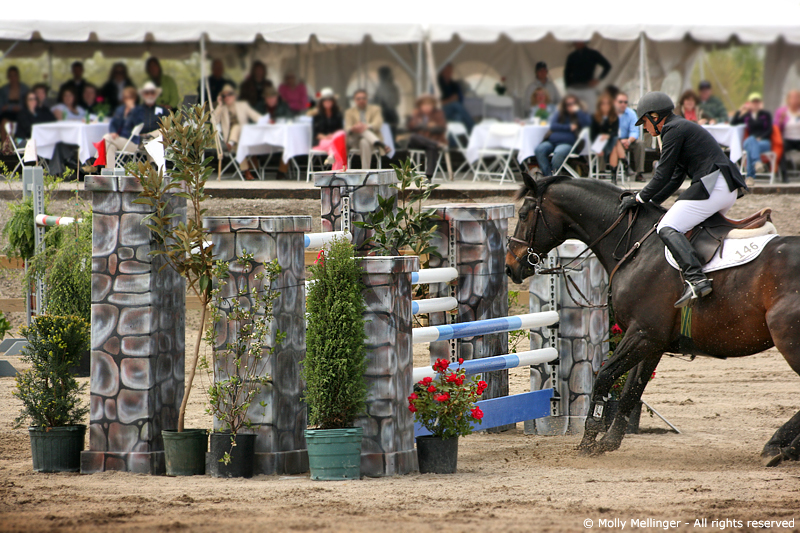
It's that busy time of year again, which means I don't have as much time to blog. I'm going to try to get some good posts in this weekend, but until then y'all may have to be content with the little tidbits I can find. (Sorry!) Today, I wanted to share a video from my night of Grand Prix show jumping. These riders were awesome!
Note: Sorry about the quality. For some reason, it did not translate well onto YouTube.
Tuesday, April 13, 2010
A Three-Day Fairy Tale
Although I've never personally experience an equestrian vacation, I've always been enchanted by them. What could be more relaxing than an extended visit at a beautiful resort with Woman's Best Friend, the horse? To me, it seems to be the perfect opportunity to experience something truly unique. I can't even imagine the characters you would meet!
What could possibly be better than treating yourself to an equestrian vacation? How about having someone else pay for you?
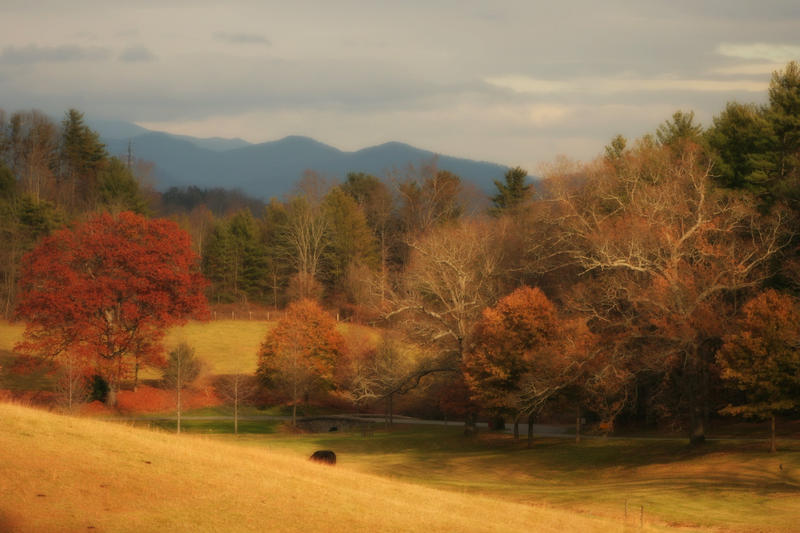
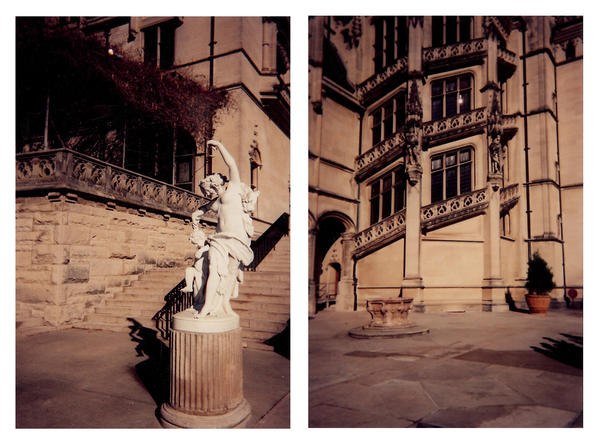
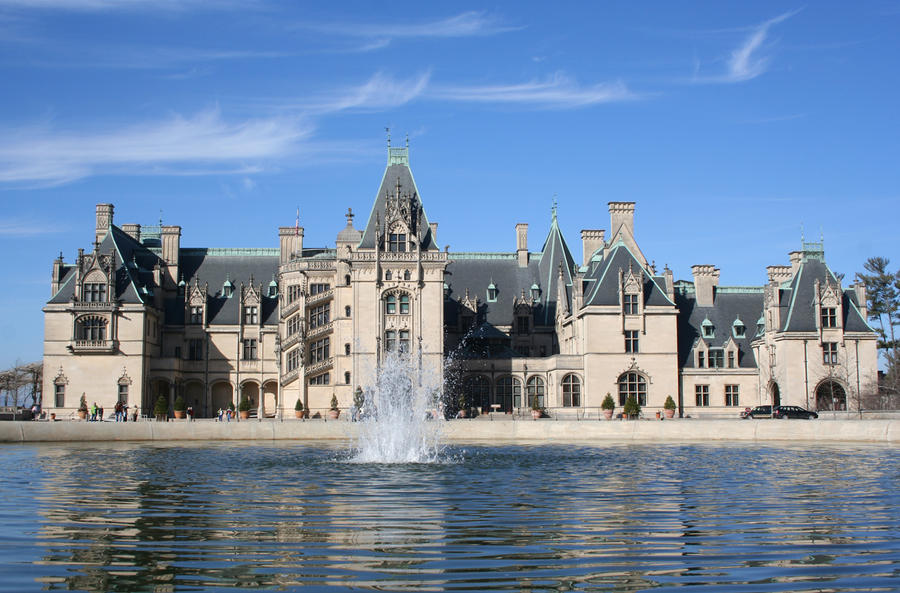
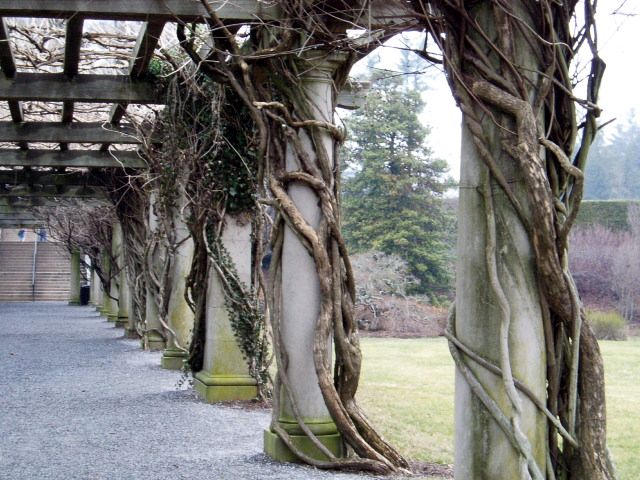
I found a fabulous little sweepstakes from DiscoverHorses.com in Practical Horseman, and I couldn't help passing the link on. The three-night accommodations aren't exactly what I would call an extended stay, but nonetheless, it sounds pretty tempting. The "luxurious" Inn at North Carolina's Biltmore Estate will happily put up the sweepstakes winner (plus one) and offer a lesson and daily trail rides. In my curiosity, I did some research on what they called the famous Biltmore Estate. I'd never heard of it, but I think these pictures speak for themselves.
Biltmore is absolutely gorgeous, and I think I might have to add this place to my list of Must Sees. Looking at the pictures alone is like stepping into a fairytale. With architecture inspired by the French Renaissance, its courtyards and fountains scream of Old Europe. Or would it be better to say they sing of it? It's easy to imagine Cinderella herself walking through the arched walkways, her songbirds crooning in her ear. Add the coachman's white steeds to that picture, and the magical fairytale is pretty much complete.
_________________
You can get more information on Biltmore here, and enter for a chance to win a three-night at DiscoverHorses.com.
Subscribe to:
Posts (Atom)